
Real-Time Analytics for Digital Signage: Measuring Engagement and Optimising Content Performance
Digital signage without analytics is blind. Measuring engagement, dwell time, and conversion allows organisations to optimise content and maximise screen value.
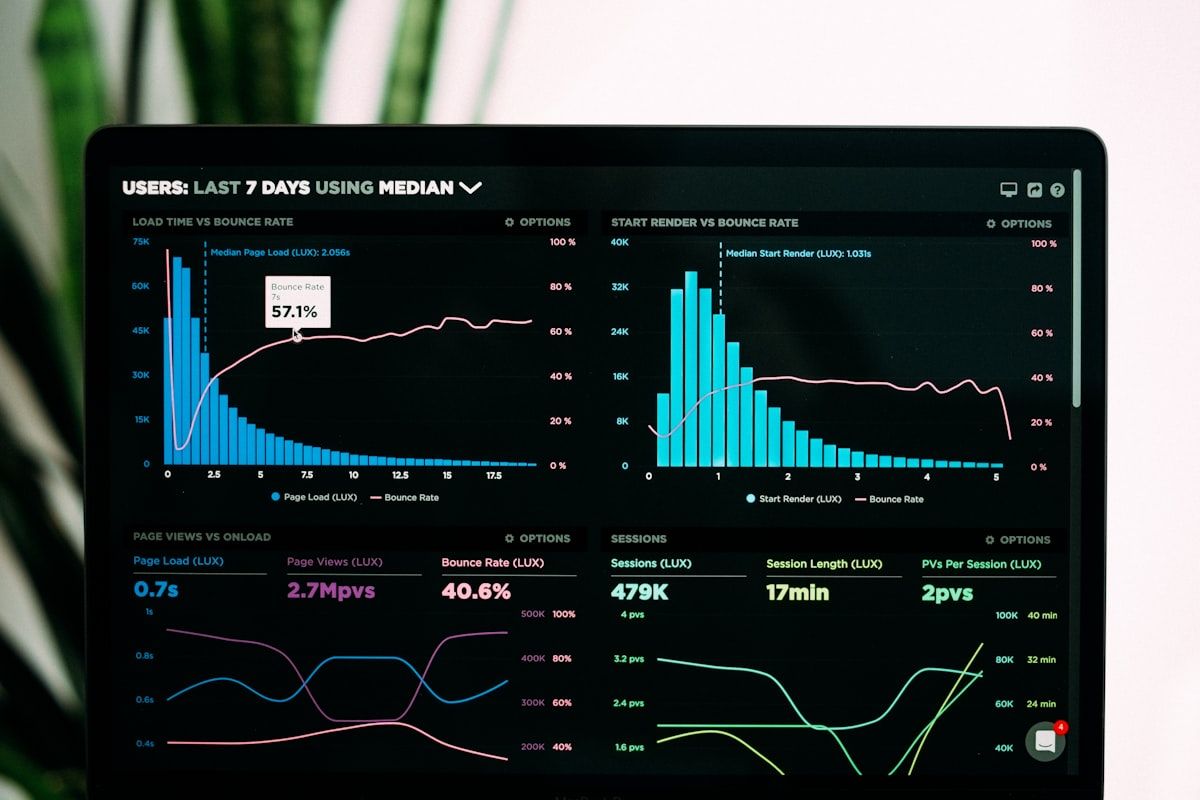
Visibility Without Measurement Has Limits
Most digital signage networks know what content is playing. Far fewer know what that content is achieving. Without measurement, screens become passive display surfaces rather than performance-driven channels. Content cycles are based on assumptions rather than evidence, and optimisation becomes guesswork.
Analytics changes that. It turns signage into a measurable, continuously improving system.

From Playback Logs to Engagement Signals
The starting point for most systems is playback data. Every screen logs what content was displayed, when it ran, and where it was shown. This provides operational visibility, but it does not answer the most important question: did anyone engage?
To move beyond this, platforms incorporate richer signals. Audience measurement systems can estimate foot traffic and dwell time, identifying when people stop and engage with content. In some environments, computer vision models are used to infer aggregated audience characteristics without storing personally identifiable information.
In retail settings, these signals can be combined with transaction data to understand whether specific content correlates with purchasing behaviour. The result is a shift from content tracking to audience understanding.
Measuring What Matters
Different environments prioritise different metrics. In high-footfall areas, reach and dwell time indicate whether content is capturing attention. In retail, the focus shifts to conversion, whether campaigns influence purchasing behaviour. In corporate or informational settings, engagement duration and repeat exposure may be more relevant.
The key is alignment. Metrics should reflect the outcome the organisation is trying to influence, not just what is easiest to measure.
Experimentation at Network Scale
Once measurement is in place, optimisation becomes possible. Large signage networks can apply experimentation techniques similar to those used in digital platforms.
Content variations can be deployed across different screen groups, allowing performance to be compared under real-world conditions. Over time, this creates a feedback loop where underperforming content is replaced and effective content is scaled.
What was previously static content management becomes a process of continuous improvement.
Building the Data Pipeline
Capturing and processing this data requires a robust pipeline. Each player generates logs continuously, often in environments with intermittent connectivity. To handle this, devices buffer data locally and transmit it in batches when connections are available.
At the platform level, streaming systems process incoming events in real time, enabling rapid detection of anomalies such as screens going offline or unusual engagement patterns.
Historical data is stored for trend analysis and reporting, while dashboards provide accessible insights for non-technical teams. The challenge is not just collecting data, but making it usable.
Turning Insight into Action
Analytics only delivers value when it influences decisions. High-performing organisations build processes around their data. Content is reviewed regularly, performance is benchmarked, and campaigns are adjusted based on evidence rather than intuition.
This closes the loop between measurement and execution. Over time, the system becomes more effective not because of a single optimisation, but because it continuously improves.
From Screens to Performance Channels
Digital signage is often treated as a broadcast medium. With analytics, it becomes a performance channel. Content can be measured, tested, and optimised in the same way as digital advertising or web experiences. This shifts signage from a cost centre to a measurable contributor to business outcomes.
Final Thought
The value of a digital signage network is not determined by how many screens are deployed. It is determined by how effectively those screens influence behaviour. Analytics provides the visibility needed to make that impact measurable, and improvable.
Building Data-Driven Signage Platforms?
Intagleo Systems helps organizations design analytics-enabled digital signage platforms, combining real-time data pipelines, audience measurement, and performance-driven content systems.